
How to keep your car battery in good health: A 2026 guide
A flat battery is the single most common reason drivers call for roadside assistance in the UK. It's also largely preventable. Modern car batteries — particularly the AGM (absorbent glass mat) units fitted to most cars with start-stop technology since around 2015 — are more capable than older lead-acid batteries, but they're also less forgiving of neglect. Here's a complete guide to keeping your battery healthy in 2026, whatever type of car you drive.
1. Understand what type of battery your car has
Not all car batteries are the same, and the type fitted to your car changes what maintenance it needs and how it should be charged.
Standard lead-acid batteries are fitted to older or simpler cars. They're sealed and maintenance-free on most modern versions — so the old advice about topping up with distilled water only applies to a small number of older or non-sealed batteries. On a modern sealed battery, there's nothing to top up.
AGM (absorbent glass mat) batteries are fitted to most cars built from around 2013 onwards that have stop-start technology. They're more powerful and longer-lasting than standard batteries, but they must be replaced like-for-like. Fitting a standard battery to a car that originally came with AGM will cause repeated battery failures and potential electrical system damage.
EFB (enhanced flooded batteries) are a step between standard and AGM, fitted to some mid-range stop-start cars. Again, always replace with the correct type.
If you're unsure what battery type your car has, check the handbook or ask a garage before buying a replacement. Fitting the wrong type is an expensive mistake.
2. Keep your battery terminals clean
Corrosion on the battery terminals — the white or blue-green powdery buildup you sometimes see around the positive and negative connections — increases electrical resistance and reduces the current the battery can deliver. Over time it can cause starting difficulties and flatten the battery faster.
Check the terminals every six months as part of a general under-bonnet inspection. If you spot corrosion, disconnect the terminals (negative first, then positive), clean them with a small brush dipped in a bicarbonate of soda and water solution, rinse with clean water, dry thoroughly, and reconnect (positive first, then negative). A light coating of petroleum jelly or terminal grease on the connectors after cleaning will slow future corrosion.
3. Avoid excessive short trips
Every time you start your car, the battery provides a significant burst of current to turn the starter motor. After starting, the alternator recharges the battery — but only while the engine is running. A trip of less than two or three miles often doesn't give the alternator enough time to fully replace the energy used in starting.
If you regularly make very short journeys — a two-minute drive to the school, a quick run to a nearby shop — your battery is being steadily discharged without being fully recharged. Over time this causes sulphation of the battery plates, permanently reducing capacity. The fix is simple: where possible, combine short errands into a single longer journey, or take the occasional longer drive specifically to allow the battery to fully recharge.
4. Don't leave your car unused for long periods
A parked car is not an inactive car electrically. Modern vehicles have numerous always-on systems — alarm systems, keyless entry modules, connected services, dash cameras, tracker units — that draw a small but continuous current even with the engine off. This is called parasitic drain, and it can flatten a battery completely in two to four weeks if the car isn't driven.
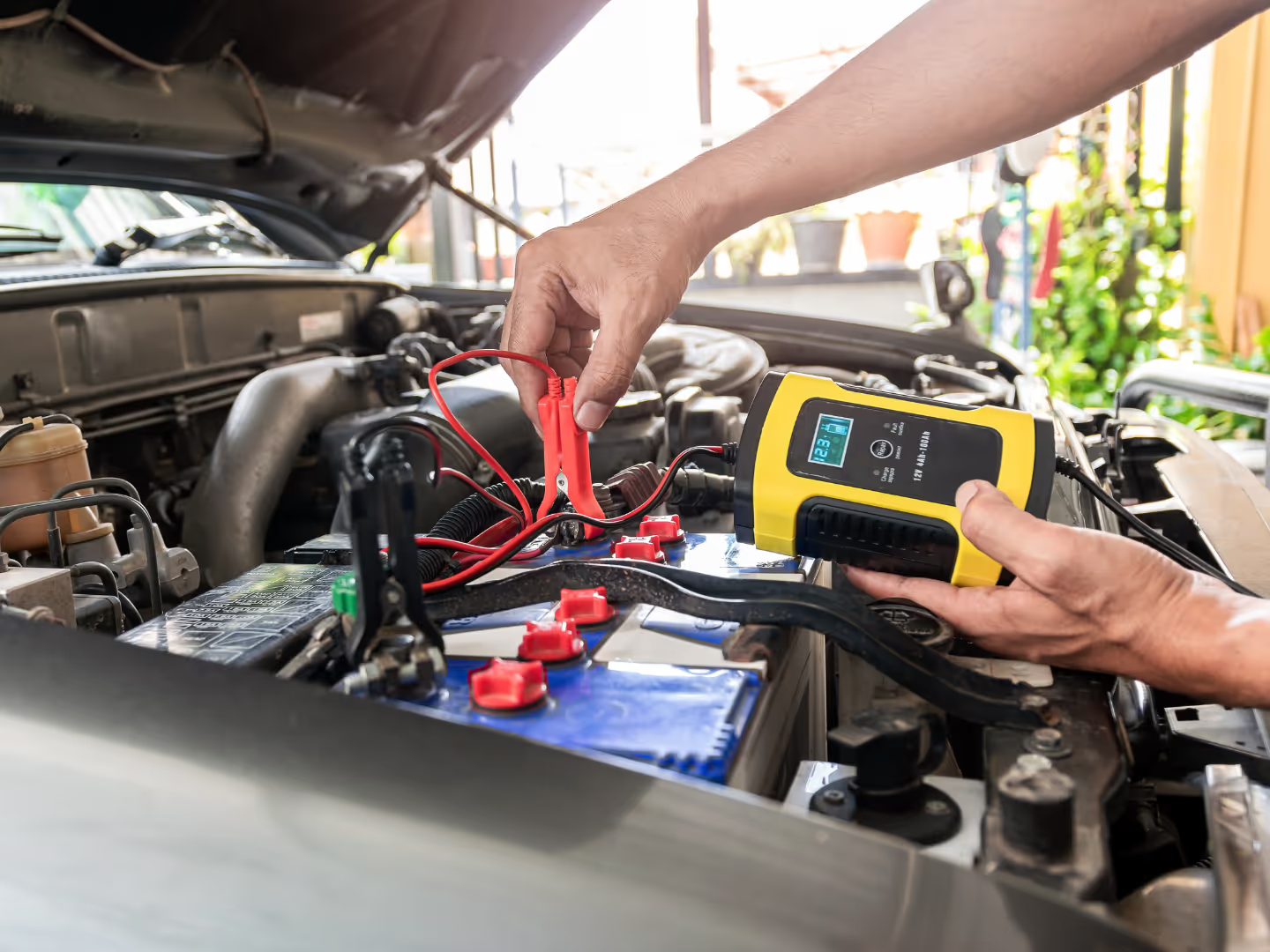
If you're leaving your car unused for more than a week, a battery conditioner (also called a trickle charger or smart charger) is the best solution. Plug it in via a mains socket and it will maintain the battery at its optimal charge level indefinitely without overcharging it. They're available from around £20–30 and are a worthwhile investment for anyone who has a second car, seasonal vehicle, or travels frequently.
5. Make sure the battery is secure
The battery clamp and bracket that hold your battery in place serve an important purpose beyond just stopping the battery falling out. Excessive vibration — from a loose battery bouncing around as you drive — can cause internal damage to the battery's plates and connections, shortening its life significantly. After any battery replacement, confirm the clamp is tight and the battery doesn't rock when pushed. If you notice unusual rattling from the engine bay, a loose battery should be one of the first things you check.
6. Watch out for electrical drains
Aftermarket accessories — dashcams, phone chargers left plugged in, non-standard audio systems, permanently wired tracker units — can create a higher-than-normal parasitic drain that kills batteries within days. If your battery keeps going flat but checks out as healthy when tested, an unexpected electrical drain is the most likely cause.
A garage can perform a parasitic drain test by measuring the current draw with the car locked and all systems dormant. Normal parasitic drain is typically less than 50 milliamps. Anything significantly higher points to a faulty module or an aftermarket device that isn't switching off correctly.
7. Know the warning signs of a failing battery
Batteries rarely fail without warning. The signs are usually there if you know what to look for.
Slow, laboured starting. If the starter motor turns over more slowly than usual — especially in cold weather — the battery is struggling to deliver full cranking current. This is the most common early warning sign.
Clicking when you turn the key. A rapid clicking sound instead of the engine turning over means the battery can't deliver enough current to engage the starter motor properly. The battery is close to dead.
Warning lights. A battery warning light (looks like a battery symbol) or a check engine light can indicate a charging system fault. If it stays on, get the battery and alternator tested promptly.
Electrical gremlins. If your infotainment system resets, windows become sluggish, or interior lights seem dim, the battery or charging system may be struggling.
Swollen battery case. A battery case that looks bloated or distorted indicates internal damage, usually from overcharging or excessive heat. A swollen battery should be replaced immediately.
8. Get your battery tested regularly
Most batteries give around three to five years of reliable service, though many last longer with good maintenance. From about three years of age, it's worth having the battery load-tested annually — most garages and tyre centres will do this for free or a small charge, and many automotive accessory shops have handheld testers.
A load test measures not just the battery's voltage but its ability to deliver current under demand — which is what actually matters for starting. A battery can measure 12.6 volts at rest but still fail a load test because its internal resistance has increased with age. Knowing the battery's condition before it strands you is always better than finding out the hard way.
9. Cold weather preparation
Cold temperatures reduce a battery's capacity to deliver current — sometimes significantly. At 0°C, a typical battery has around 20% less cranking power than at 20°C. At -10°C, the reduction can be 40% or more. At the same time, the engine is harder to start in cold weather because oil is thicker and requires more energy to turn.
Before winter, if your battery is more than three years old, have it load-tested. If it's borderline, replacing it in October is far less stressful than being stranded in a cold car park in January. Make sure your battery is fully charged going into cold snaps — a battery at 80% charge is significantly more vulnerable in cold than one at 100%.
10. What to do if your battery goes flat
If your battery goes flat, jump-starting is the quickest fix — but there are important rules on modern cars. Never connect jump leads to a battery that is frozen, cracked, or visibly damaged. On cars with stop-start or AGM batteries, consult the handbook before jump-starting: many modern vehicles have specific jump-start terminals in the engine bay (rather than directly on the battery) to protect sensitive electronics.
After a successful jump-start, drive for at least 30–45 minutes at moderate speed to allow the alternator to recharge the battery. If the battery goes flat again within a few days, it needs replacing rather than recharging.
Roadside assistance from the RAC, AA, or your insurer's breakdown cover is always an option — and worth having, because a professional can test the battery and alternator on the spot and often fit a replacement immediately.
Battery care at Carsa
Every car at Carsa goes through a comprehensive inspection before sale. If you're buying a used car and want to understand what's been checked — or if you have questions about a specific vehicle's battery or electrical condition — our team is happy to help.
Related articles



Ready to find your next car?
Browse hundreds of expertly prepared used cars — all fully checked, cleaned, and ready to drive away.
Talk to us, anytime.
Our friendly team is just a message or call away.
Message us on whatsapp, 24/7